7 Considerations for Safely Packaging Aerospace Components
April 2, 2026
Delivering Packaging Solutions for Over 20 Years


When it comes to aerospace components, packaging isn’t straightforward.
You’re often dealing with awkward shapes, high-value parts, and tight tolerances.
From long, lightweight airframe components where the surface finish really matters, to heavy electronic systems that need protecting from shock and vibration, there’s a lot that can go wrong in transit.
That’s why off-the-shelf packaging usually isn’t enough. It needs to be tailored to the part, the journey it’s taking, and the conditions it’s going to face along the way.
In this blog, we’ll walk through seven of the key things to think about when packaging aerospace components.
Shock and vibration are among the most common causes of damage during transit.
Smaller aerospace components often contain delicate electronics or optically aligned systems that can lose calibration if they experience excessive shock. This can lead to costly repairs, replacements, or recalibration once the item arrives.
Larger components may withstand impacts more easily, but constant vibration can still damage painted surfaces or cause parts to shift inside the packaging.
To reduce these risks, aerospace packaging should include:
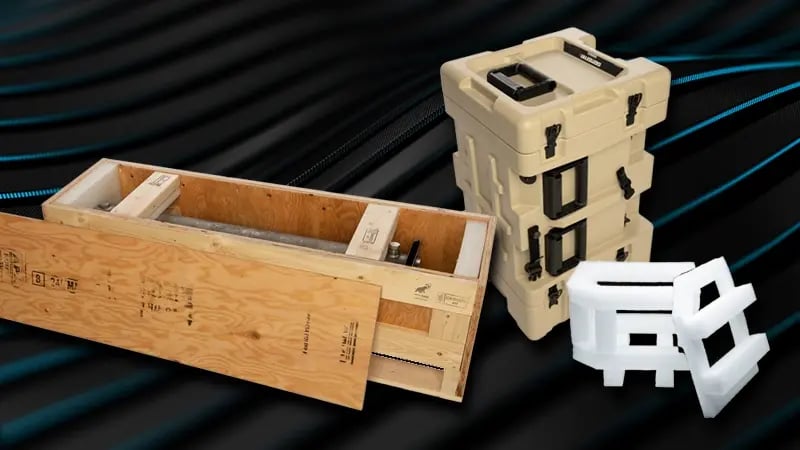
For heavier components, engineered wooden crates with internal supports help keep the part securely cradled and prevent movement during shipping.
Additional protective measures may include:
Aerospace components often require packaging that protects against environmental risks such as moisture, corrosion, or static discharge.
For metal parts, VCI (Vapor Corrosion Inhibitor) materials can be used to release protective molecules that prevent corrosion during storage and transport.
To control humidity inside packaging, a few protective solutions are commonly used:
For sensitive electronic components, electrostatic discharge (ESD) protection is also critical. Static electricity can damage delicate electronics without leaving visible signs.
Common ESD protection solutions include:
Together, these materials help prevent invisible damage and ensure sensitive components arrive in the same condition they left the facility.
The aerospace industry operates under strict regulatory and quality standards.
Packaging may need to comply with specifications such as:
Some standards dictate the materials that must be used in packaging, while others require packaging systems to undergo testing such as drop, vibration, or compression testing.
In these cases, packaging and products are tested together to verify that the component remains undamaged during simulated shipping conditions.
Once testing is completed successfully, a certification is issued confirming that the packaging meets the required standard.
Efficient packaging design can significantly reduce costs and improve consistency.
In many facilities, components are wrapped in excessive amounts of bubble wrap before being placed in oversized boxes. This approach often increases packing time and still leaves room for movement during transit.
A more effective solution is custom engineered packaging.
For example, a custom foam insert can hold a component securely in place, eliminating movement and ensuring that every unit is packed the same way.
The benefits include:
Hybrid packaging systems using both wood and heavy-duty corrugated materials can also reduce packaging weight and make disposal easier for end users.
Quality is central to aerospace manufacturing, and packaging must meet the same high standards.
At SmartShield, we support aerospace customers by maintaining rigorous quality processes, including:
These processes help ensure that every packaging solution performs consistently and meets the expectations of aerospace manufacturers.
Sustainability is becoming increasingly important across the aerospace supply chain.
Many manufacturers are looking for ways to reduce waste and reuse packaging materials wherever possible.
One approach is returnable crate programs. In these systems, crates are returned after use, inspected and cleaned, and then prepared for reuse. This allows customers to use the same crate multiple times while reducing waste.
Other sustainable packaging strategies include replacing traditional materials with paper-based alternatives such as:
In some cases, these materials can even replace wooden components while maintaining structural strength.
Packaging availability is often just as important as packaging design.
Many aerospace facilities have limited storage space and rely on packaging suppliers to provide materials quickly when production or shipping schedules require them.
To support this, SmartShield offers services such as:
These services help ensure packaging is available exactly when it’s needed, preventing delays in shipping critical aerospace components.
We’re proud to work closely with leading aerospace manufacturers to design packaging solutions that protect their high-value components, streamline packing processes, and ensure compliance with industry standards.
As one aerospace customer shared:
“SmartShield’s VMI program has really simplified our packaging process here at PCC Woodbridge. We know we can get what we need when we need it almost every time.”
— Shipping & Receiving Supervisor, PCC Woodbridge Division
And when urgent situations arise, the impact of reliable packaging becomes even clearer:
“Your team provided the crate for our landing gear the same day as the request, allowing us to get our gear repaired faster and the aircraft returned to service earlier than expected.”
— WestJet Materials Specialist
Aerospace packaging isn’t just about moving components from point A to point B.
It’s about protecting high-value parts, maintaining compliance, and ensuring components arrive ready for installation and operation.
With engineered solutions such as custom crates, foam inserts, and returnable packaging programs, manufacturers can reduce risk, improve efficiency, and protect critical components throughout the supply chain.
SmartShield works with aerospace manufacturers to design custom packaging solutions tailored to their exact requirements.

Article written by SmartShield