

XLPE vs. Zote Foam: What's the Difference and Which Should You Choose?
November 19, 2026
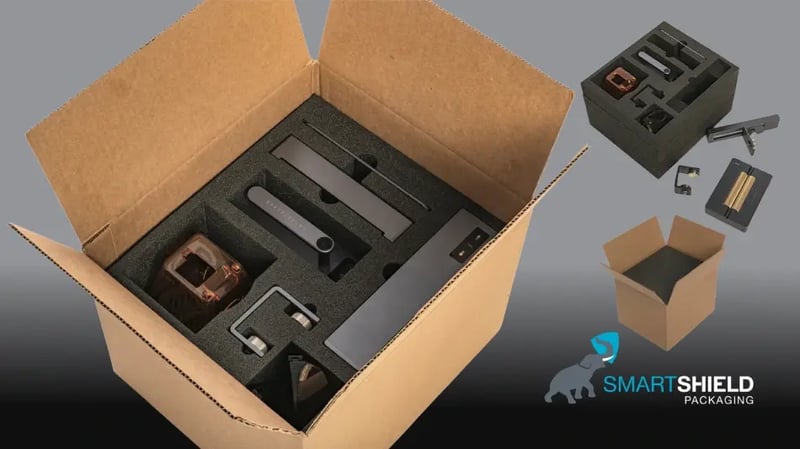
XLPE and Zote foam are both popular choices for protecting valuable equipment during shipping and storage.
XLPE (cross-linked polyethylene) is widely used in protective packaging, and Zotefoams' Plastazote is a specialist type of XLPE.
While they're part of the same foam family, differences in manufacturing, available grades and sheet sizes can make one option more suitable than another.
So, how do you know which one is right for your packaging?
There are a few things worth thinking about first:
These are the kinds of questions we ask at SmartShield before recommending a foam material. Both XLPE and Zote foam have their strengths, but understanding the differences can help you make the right choice for your equipment.
Let's take a closer look.
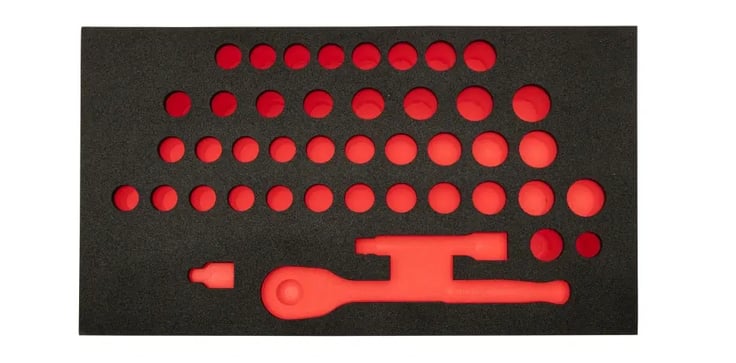
Cross-linked polyethylene, or XLPE, is a closed-cell foam that's widely used in industrial protective packaging.
It's known for its smooth, fine-cell finish and durability, thanks to a manufacturing process that strengthens the foam's structure.
That smooth surface also makes suitable XLPE grades a good choice for protecting painted, polished and other delicate finishes, and offers Class A surface protection.
What makes XLPE particularly useful is that it can do more than cushion a product for a single journey. It's tough enough for repeated use, while still providing the cushioning and surface protection that valuable equipment needs.
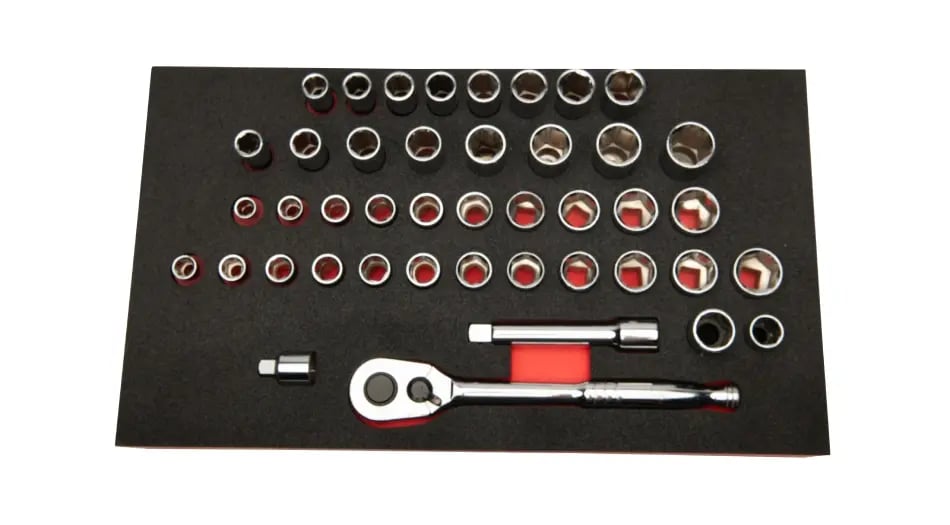
You'll often find XLPE used for things such as:
And because it's available in different densities, thicknesses and colours, we can tailor the foam to suit the equipment being protected.
Here's something worth clearing up first: Zote isn't a completely different type of foam.
Zotefoams is a specialist foam manufacturer, and its product ranges include Plastazote, a high-quality cross-linked polyethylene foam. So, when we talk about XLPE versus Zote foam, we're often comparing foams from the same material family, but with differences in how they're made and how they perform.
One of the things that sets Zotefoams materials apart is the manufacturing process. Plastazote, for example, is produced using nitrogen gas expansion, which creates a consistent, fine-cell structure.
The result is lightweight, durable foam with a very smooth, clean finish.
This makes certain Zote foam grades a good option when surface protection, consistency and presentation are important - for instance, with precision instruments, medical equipment, sensitive aerospace components or high-value equipment that's regularly packed and unpacked from protective cases. Its less rubbery texture also makes it easier to CNC route, helping us achieve a cleaner finish.
But does this mean Zote foam is always the better choice? Not necessarily.
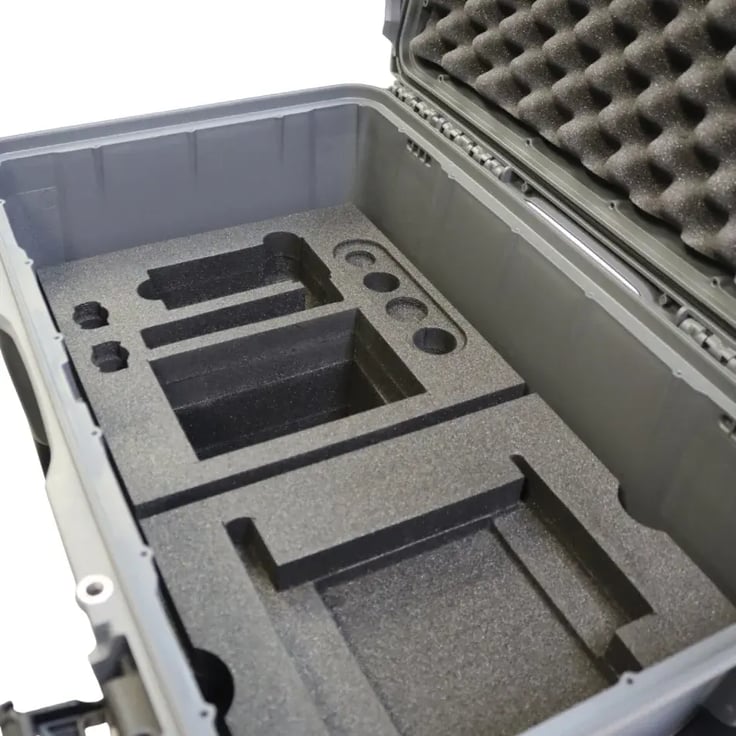
First, it's worth remembering that XLPE and Zote foam have plenty in common.
Both can provide excellent protection against shock and vibration when used in a well-designed packaging solution.
They're also moisture-resistant, suitable for repeated use and can create a neat, professional-looking interior for protective cases. Suitable grades of both materials can also protect delicate Class A surfaces.
But what sets them apart? Let's look at the four differences that could influence your choice.
One important difference between standard XLPE and Zote foam is how they're manufactured.
Standard XLPE uses a chemical blowing agent, while Zote foam uses nitrogen gas.
Why does this matter for packaging? Standard XLPE can release residual gases and other volatile compounds over time, a process known as off-gassing.
You might notice this as a strong smell, but in some applications, it can also lead to a film or residue forming on nearby surfaces, particularly during prolonged storage or exposure to higher temperatures.
This can be a concern for sensitive equipment, especially where certain metals, such as copper, are involved. We’ve encountered this issue before on past medical device packaging projects, where material compatibility was an important consideration.
It's one reason we look at what the foam will be in contact with, not just how well it cushions the product.
Another practical difference between XLPE and Zote foam is the size and thickness of the sheets available.
Zote foam is available in thicknesses up to 2 inches. If your packaging needs thicker cushioning, we can laminate layers together - but this will leave a seam.
If you need a thicker, seamless foam insert, XLPE may be the better option, as it's available in sheets up to 4 inches thick.
XLPE also comes in larger sheet sizes, which can make it a more practical choice for packaging oversized equipment or creating large foam components.
So, sometimes the decision comes down to something as simple as the size of the product you're trying to protect and whether seams are acceptable in the finished insert.
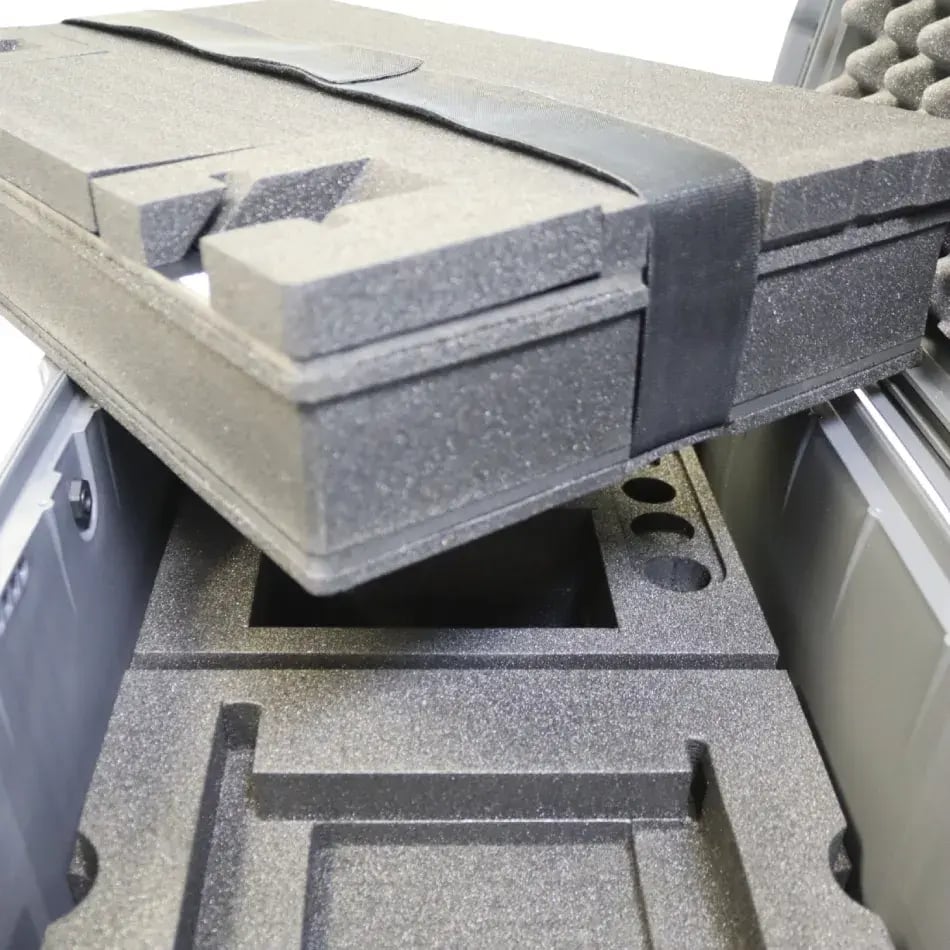
If your foam insert needs a particularly clean, professional finish, Zote foam can have the advantage.
XLPE can be more challenging to CNC router because the material tends to melt onto the router bits, making it harder to achieve a clean cut. With Zote foam we can achieve a much cleaner cut surface; it’s also less prone to showing fingerprints and scratches.
This can make a real difference when the foam is part of the product's presentation, such as inside a protective case used for demonstrations or high-value equipment.
Does your packaging need to control static buildup and discharge, or meet a specific fire rating?
Both XLPE and Zote foam are available in specialist grades designed for these requirements. So, the decision often comes down to which suitable material offers the best value for your application.
Sometimes, the cost difference makes the choice fairly straightforward.
How do these differences translate into real packaging applications?
Let's look at a few examples of where we might recommend XLPE or Zote foam.
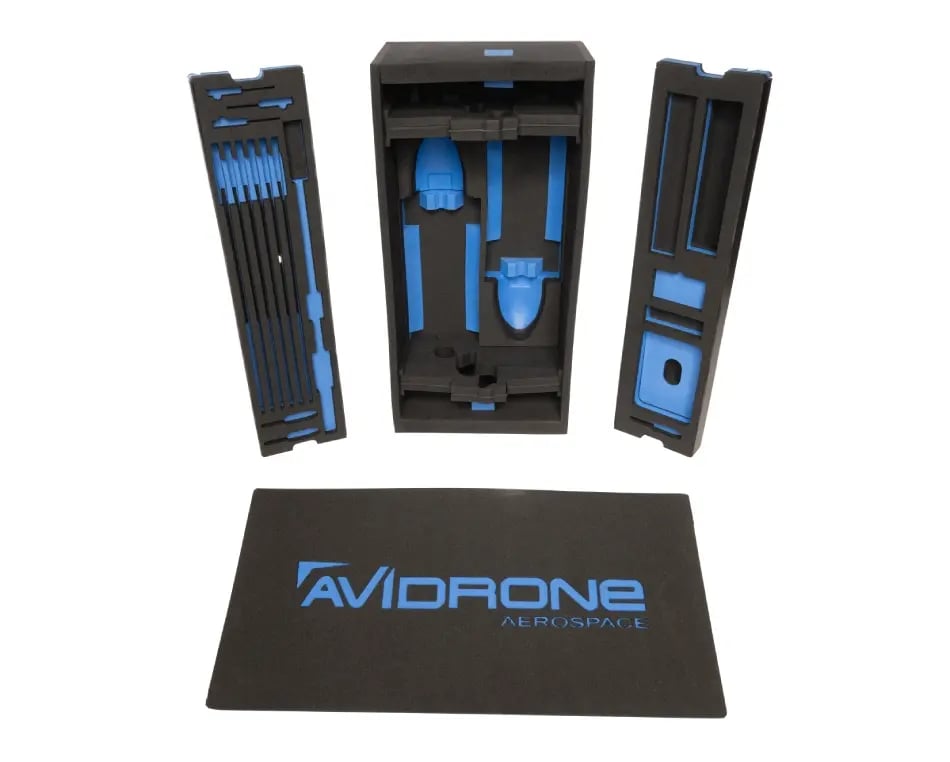
Aerospace and defence packaging often involves valuable components that need reliable protection during transport, storage or repeated handling. These might include precision-machined parts, communications equipment, specialist tools or sensitive instruments.
For some applications, durable XLPE inserts provide exactly the protection required.
For others, a suitable Zote foam grade may be worth considering, particularly where a consistent surface finish, specific material properties or cleaner CNC-machined details are important.
Whichever material is chosen, custom foam sets can help keep individual components separated, supported and easy to identify. This can be particularly useful for field-service kits and maintenance equipment, where tools and components need to be regularly removed and replaced.
Medical equipment comes with its own packaging challenges. As well as providing protection during transport, it's often important that individual components can be easily identified, removed and handled when they reach their destination.
Custom foam inserts can help with this, giving each component its own place and making unpacking and handling more straightforward.
Both XLPE and suitable Zote foam grades can work well, depending on the equipment and how the packaging will be used.
If cleaning, sterilisation or other specialist requirements are involved, we'll also need to check that the chosen foam grade is compatible with those processes.
For electronics and robotics manufacturers, there's often more to protect than the main piece of equipment. Sensors, connectors, circuit boards, motors and precision assemblies may all need their own protection during shipping.
Custom foam inserts can help keep these components securely in place, preventing them from moving around or coming into contact with one another.
Some electronic components also need protection against electrostatic discharge (ESD), which can affect the type of foam we recommend.
Servers, network switches, storage systems and other data centre equipment can be heavy, valuable and sensitive to damage during transportation.
Custom XLPE or suitable Zote foam inserts can help support equipment, protect exposed ports and connectors, and keep removable components securely in place.
For equipment that's regularly transported between facilities or used in maintenance kits, durable, reusable foam inserts can also make packing and unpacking more straightforward.
Where sensitive electronics are involved, the foam specification may need to account for ESD protection as well as physical cushioning.
If you're packaging sensitive electronics, there are extra things to consider.
Some electronic components can be damaged by electrostatic discharge (ESD), even when there's no visible sign of damage. It's worth knowing that ordinary XLPE or Zote foam isn't automatically suitable for ESD-sensitive equipment.
Specialist foam grades are available with different electrical properties, including static-dissipative and conductive options. These aren't interchangeable, and the right choice depends on the equipment and the level of protection required.
For example, Zotefoams produces specialist static-dissipative and conductive Plastazote grades for electronics packaging applications.
If you're unsure which level of ESD protection your equipment needs, it's worth speaking to a technical packaging designer. They can help establish the requirements and identify a suitable foam grade rather than relying on a general description such as 'anti-static'.
Short answer: depends what you're packaging.
Standard XLPE is a good choice for many industrial applications. It's durable, versatile and can be made into custom inserts that provide reliable protection.
Zote foam can be a good choice when specific material properties are important, such as a particularly consistent cell structure or a smooth, high-quality surface finish.
But neither is automatically better at cushioning or protecting your equipment. The foam's density, grade, thickness and the design of the insert all play a part in how well it performs. And there's the budget to think about too.
Not every product needs a more expensive foam. Sometimes, a well-designed standard XLPE insert is exactly what's needed.
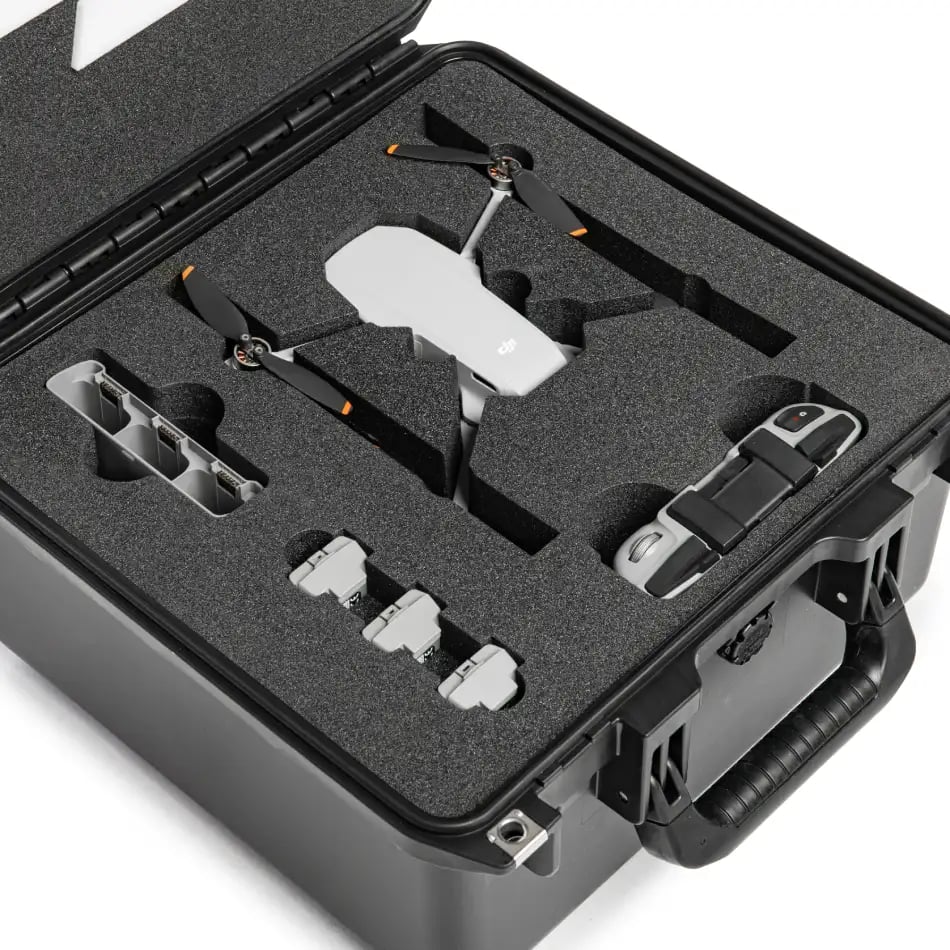
When deciding between XLPE and Zote foam, it helps to think about what the packaging needs to achieve.
Here are five questions worth considering:
Thinking through these requirements can help narrow down the most suitable foam material, density and insert design. In some cases, the best solution may involve more than one foam type or a combination of protective materials.
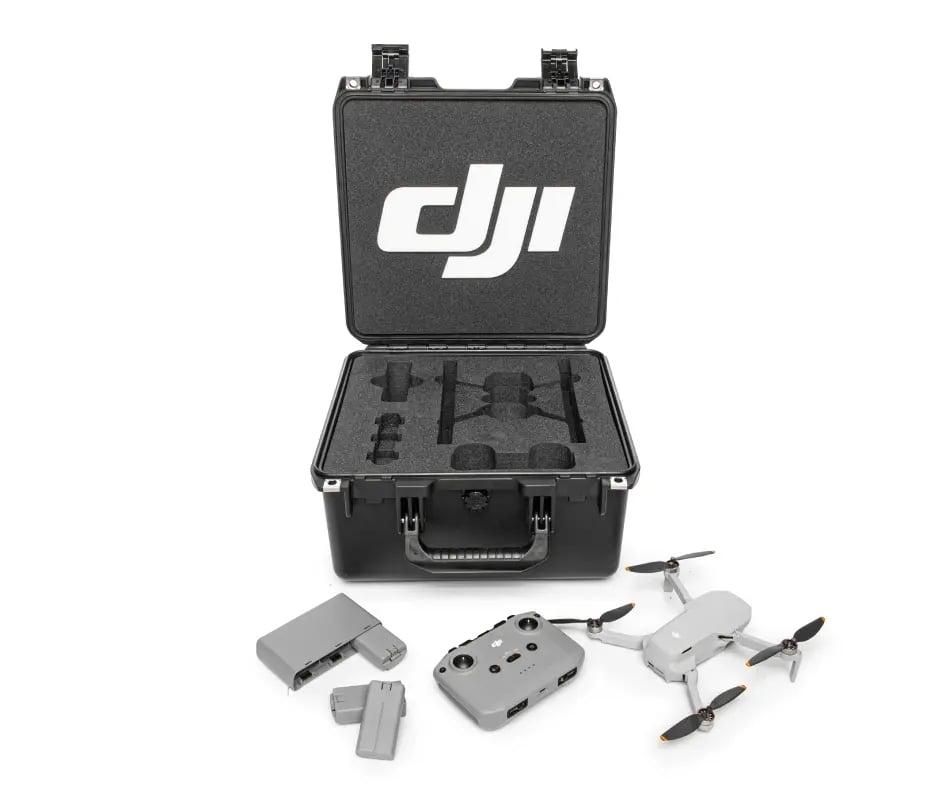
Even the best protective foam won't perform as intended if the insert isn't designed properly around the equipment.
Where the product is supported, how much room it has to move and how the foam fits inside the outer packaging all need careful consideration.
At SmartShield, we look at the complete packaging solution, whether that's a custom foam set, a protective case interior or specialist packaging for aerospace, defence, medical or electronic equipment.
That's where our team can help.
We'll talk through your requirements and help you choose the right foam for your product. And if there's a more cost-effective material that does the job just as well, we'll explore that with you too, including providing samples if you need them.

Article written by SmartShield