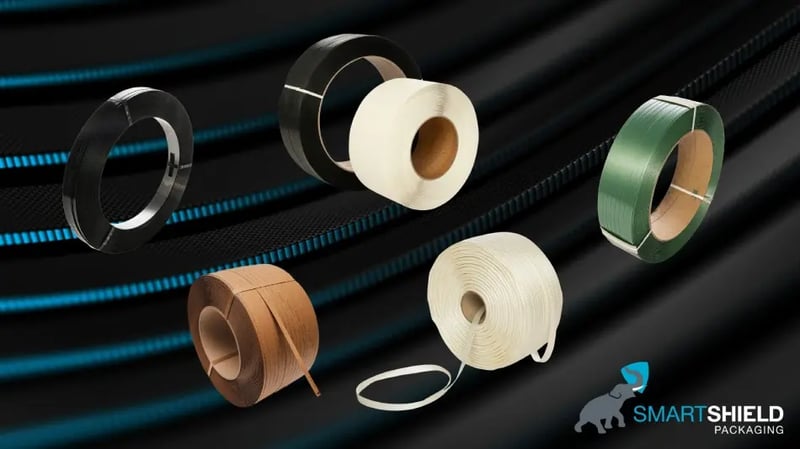
What’s the best type of strapping for your industrial shipment?
If you’re shipping high-value items in aerospace, defence, medical, or electronics packaging, strapping isn’t just there to “hold it all together.” It’s a key part of your protective packaging system.
The right pallet strapping for shipping keeps loads stable, reduces damage, and makes handling faster and safer. But with so many industrial strapping types available, choosing the right one can feel like a guessing game.
So here’s a simple, practical industrial strapping guide to help you pick the best strapping for your pallets and shipments, based on load weight, surface type, transport conditions, and sustainability goals.
Quick guide: Best strapping for pallets by load type
Here’s the 10-second version before we dive in…
- Lightweight bundling or carton closure: polypropylene strapping for pallets / carton closure
- Medium–heavy pallets needing long-term retained tension: polyester (PET) strapping for heavy loads
- Recyclable: paper strapping recyclable alternative to polypropylene or polyester
- Heavy loads with sharp edges, but safer handling than steel: cord strapping vs steel strapping
- Maximum strength for sharp edges or harsh conditions: steel strapping for sharp edges
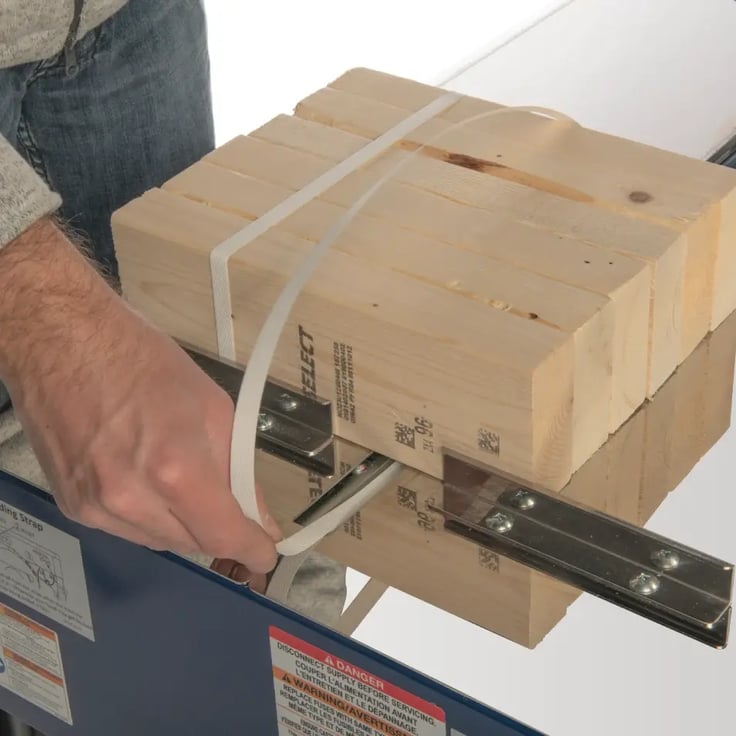
What is Polypropylene (P/P) strapping
Polypropylene is the go-to strap for everyday loads.
Best for: light to medium-duty packaging and palletizing
This is the most common option in strapping for industrial packaging, especially for carton closure, light palletizing, and bundling smaller components.
Why people choose polypropylene strapping
- Cost-effective. The most economical of all industrial strapping types.
- Lightweight and easy to handle. Helpful for busy packing areas.
- Flexible with shock absorption. Great if loads might settle or shift slightly.
- Moisture and corrosion resistant. Won’t rust or stain goods.
- Versatile tooling options. Works with manual tensioners/seals, buckles, friction-weld tools, and semi/automatic strapping machines.
- Safe to use. No sharp edges like steel.
- Recyclable. A strong choice for sustainability programs
- Multiple widths and colours. Custom printed strapping is available if you want branding.
Things to watch out for
PP has higher stretch than PET or steel, so it’s not ideal for heavy-duty pallet strapping or long-term retained tension needs.
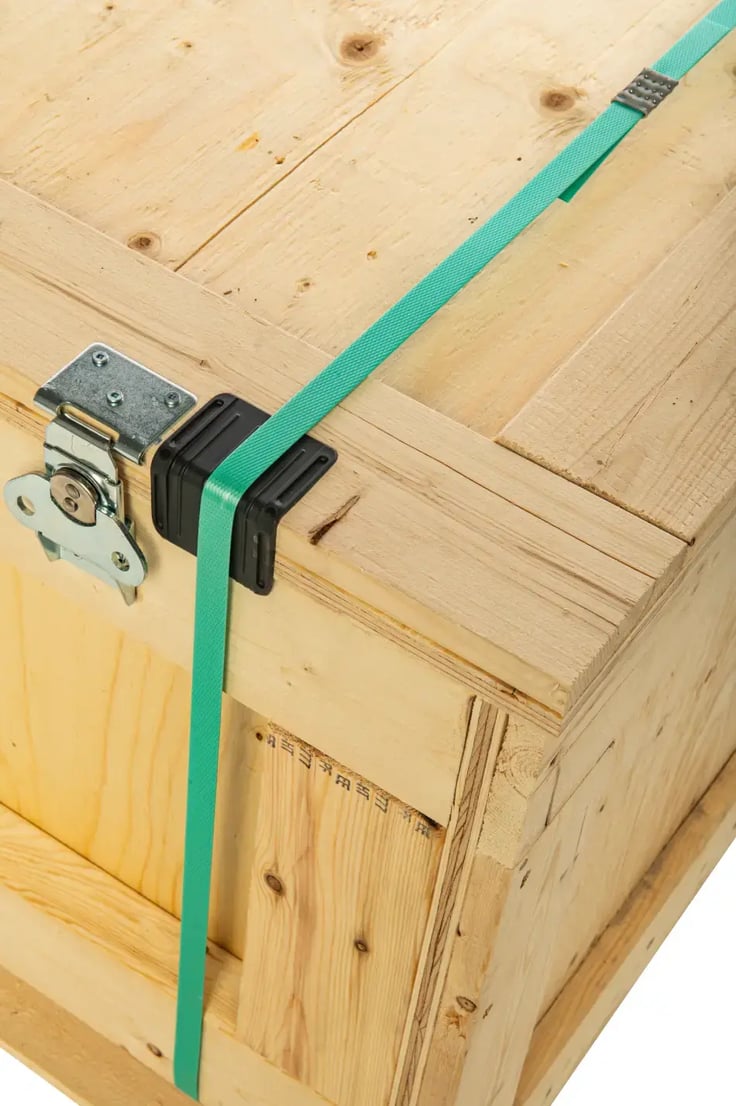
What is Polyester (PET) strapping?
If you’re stepping up to heavier pallets, PET is usually the next move.
Best for: medium to heavy loads needing strong retained tension
PET is a popular upgrade for customers looking for best strapping for pallets without the downsides of steel.
Why people choose polyester (PET) strapping
- High tensile strength. Comparable to steel for many loads.
- Low elongation and superior tension retention. Stays tight over long routes.
- Excellent elongation and recovery. Absorbs impacts without snapping.
- Weather and UV resistant. Great for outdoor storage or harsh environments.
- Safer than steel. No sharp edges and far less recoil risk.
- Lightweight coils. Easier handling and fewer changeovers than with steel strapping.
- Highly recyclable and often made with recycled content.
- Versatile tooling options. Works with manual tensioners/sealers and seals, friction-weld tools, and some semi/automatic strapping machines.
Things to watch out for
With sharp-edged products, PET performs best when paired with edge protection.
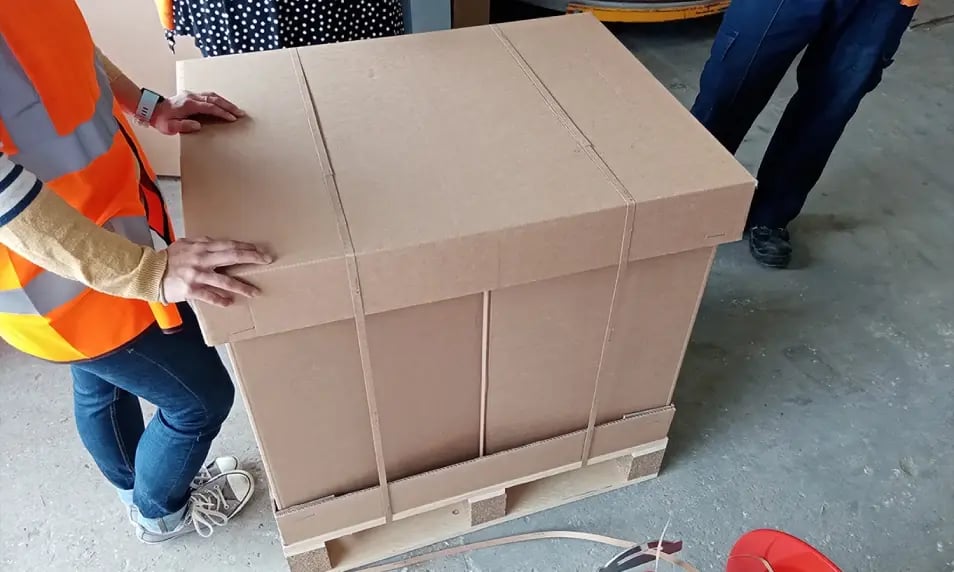
What is reinforced paper strapping?
If sustainability is top of your list, paper strapping is worth a look
Best for: bundling and palletizing with sustainability in mind
A strong paper strapping recyclable alternative for organisations aiming to keep packaging curbside-friendly.
Why people choose paper strapping
- Fully recyclable with corrugate. Easy curbside disposal.
- Biodegradable and plastic-free. Clear sustainability win.
- Safe for packers. No sharp edges and easy removal.
- Lightweight. Helps reduce shipping weight.
- When switching from PP or PET plastic straps there is no need to replace tools.
Things to watch out for
- Still less common in the market, so it can be more expensive than plastic strapping in some cases.
- Best for light to medium loads rather than heavy pallets.
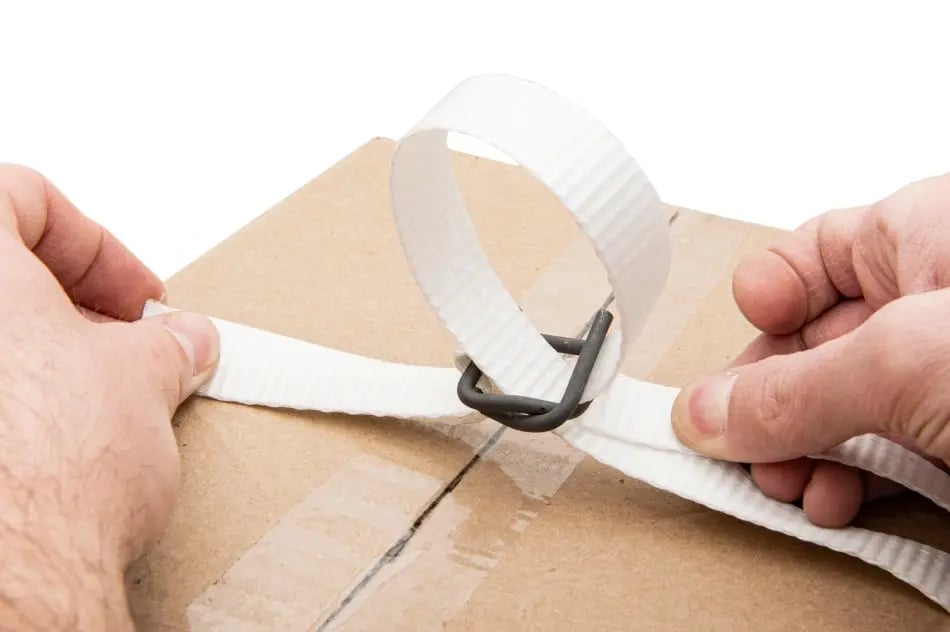
What is Cord strapping (poly cord)?
Cord strap is a great option when you need serious strength without the harshness of steel.
Best for: heavy loads needing high strength with safer handling
Often used for metal, lumber, stone, and awkward bundles where a softer strap is better for surfaces.
Why people choose cord strapping
- Steel-level strength with lighter coils.
- Soft and non-abrasive. Helps prevent scratching finished parts.
- Shock and tear resistant. Great for load movement in transit.
- Weather resistant and non-corrosive.
- Can be re-tensioned if needed.
- Safer handling than steel. No sharp edges or dangerous snapback.
- Flexible for irregular loads.
- Custom printing available.
- Applied with a tensioner and metal buckles.
Things to watch out for
- Not always the fastest fit for fully automated lines unless your process is set up for cord tooling.
- Cord strapping has to be used with buckles.
Sharp heavy load required corner edge protectors to prevent the strap becoming damaged.
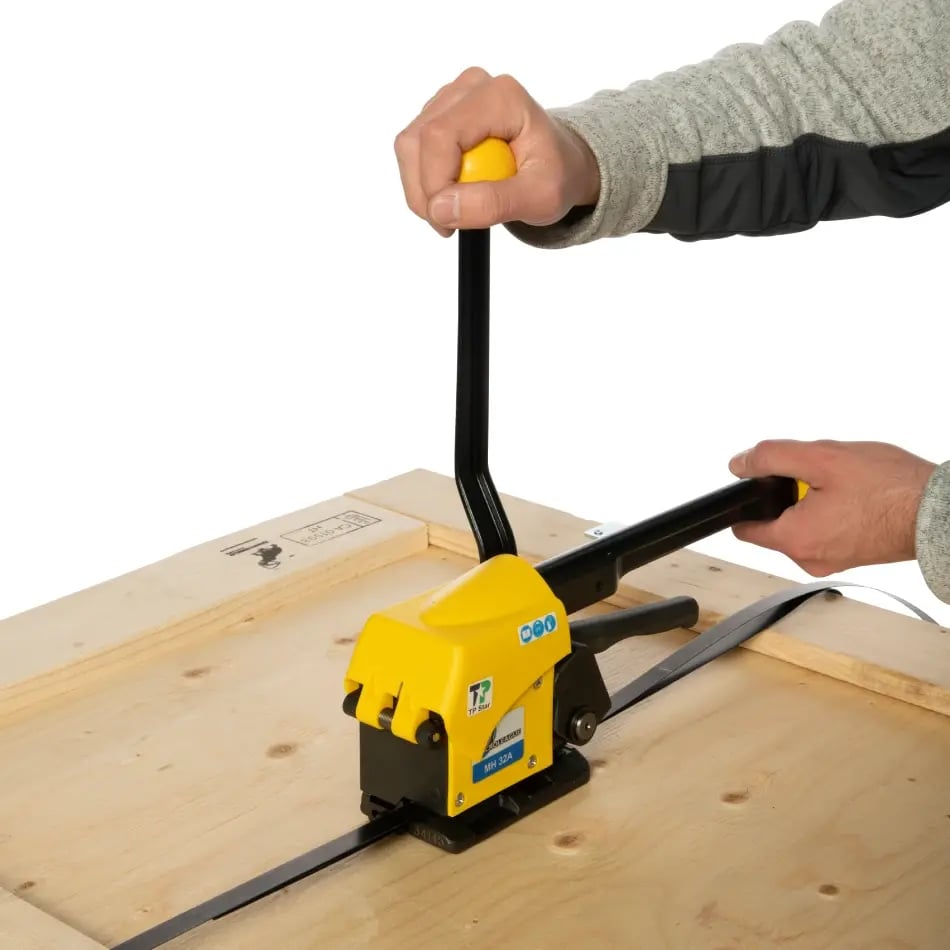
What is steel strapping?
When the load is heavy, sharp, or travelling far, steel strapping is still the heavyweight champ.
Best for: maximum strength, sharp edges, and extreme conditions
When loads are heavy, rigid, sharp-edged, or traveling long distance, steel is still the benchmark for pallet strapping for shipping.
Why people choose steel strapping
- Highest tensile strength of any strapping type.
- Minimal elongation. Stays tight even if a load settles.
- Excellent performance in harsh environments. Handles extreme temperature swings and UV exposure.
- Ideal for sharp edges and rigid loads.
- High security. Hard to tamper with during transit.
- Reliable for long-distance or international shipping.
Things to watch out for
- Heavier coils and sharp edges mean more care during application and removal.
- Edge protection is recommended for delicate surfaces.
Choosing the right strap: quick questions that make it easy
When selecting strapping for industrial packaging, ask:
- How heavy is the load?
Light → PP/Paper. Medium/heavy → PET or cord. Very heavy/sharp → steel.
- Will the load settle or shift in transit?
If yes, PET or steel is usually best for retained tension.
- Is the product surface delicate or finished?
PP, paper, cord, or PET strapping helps reduce scuffing and surface damage compared to steel, making them better suited for finished or cosmetic products.
- Are sustainability goals driving the decision?
Paper strapping or recycled-content PET/PP are strong options.
- How fast is your packing line?
High-volume automated lines typically use PP strapping. PET and PP can both be applied using friction-weld hand or power tools, with PET more commonly used for heavier loads.
Need help picking the best strapping for your pallets?
Strapping seems simple until it isn’t, especially when you’re shipping mission-critical products in aerospace, defence, medical, or electronics supply chains. The right strap protects your load, speeds up handling, and reduces overall cost.
If you’d like a second opinion, SmartShield can help you choose the right industrial strapping type and the best tools for your workflow - so your pallets ship safely and efficiently.